Our Service
Rapid Smoke Alarms Australia
Rapid Smoke Alarms Australia provides property managers, landlords and home owners with a premium low cost residential smoke alarm service. Our smoke alarm safety service ensures that all smoke alarms at a property are fully operational and compliant with the relevant government legislation regarding the installation, commissioning, location and maintenance of residential smoke alarms.
Smoke alarms save lives
Across Australia there are over 17,000 house fires every year and regrettably hundreds of deaths that follow. Most could be prevented by taking simple precautions proving that smoke alarms save lives when they are properly installed, located and operating as expected. However, a quarter of homes we visit for the first time don’t have a working smoke alarm.
We’ve got you covered
To reduce risk, annual servicing of smoke alarms is recommended nationally and mandated in a number of states. Our comprehensive annual smoke alarm safety service ensures that each property is compliant and working correctly. That way, we can help keep occupants safe and ensure landlords and property managers are fulfilling their compliance obligations.
Rapid Smoke Alarms Australia offers a simple yearly attendance rate of $99.00 plus GST. This is what our service includes:
-
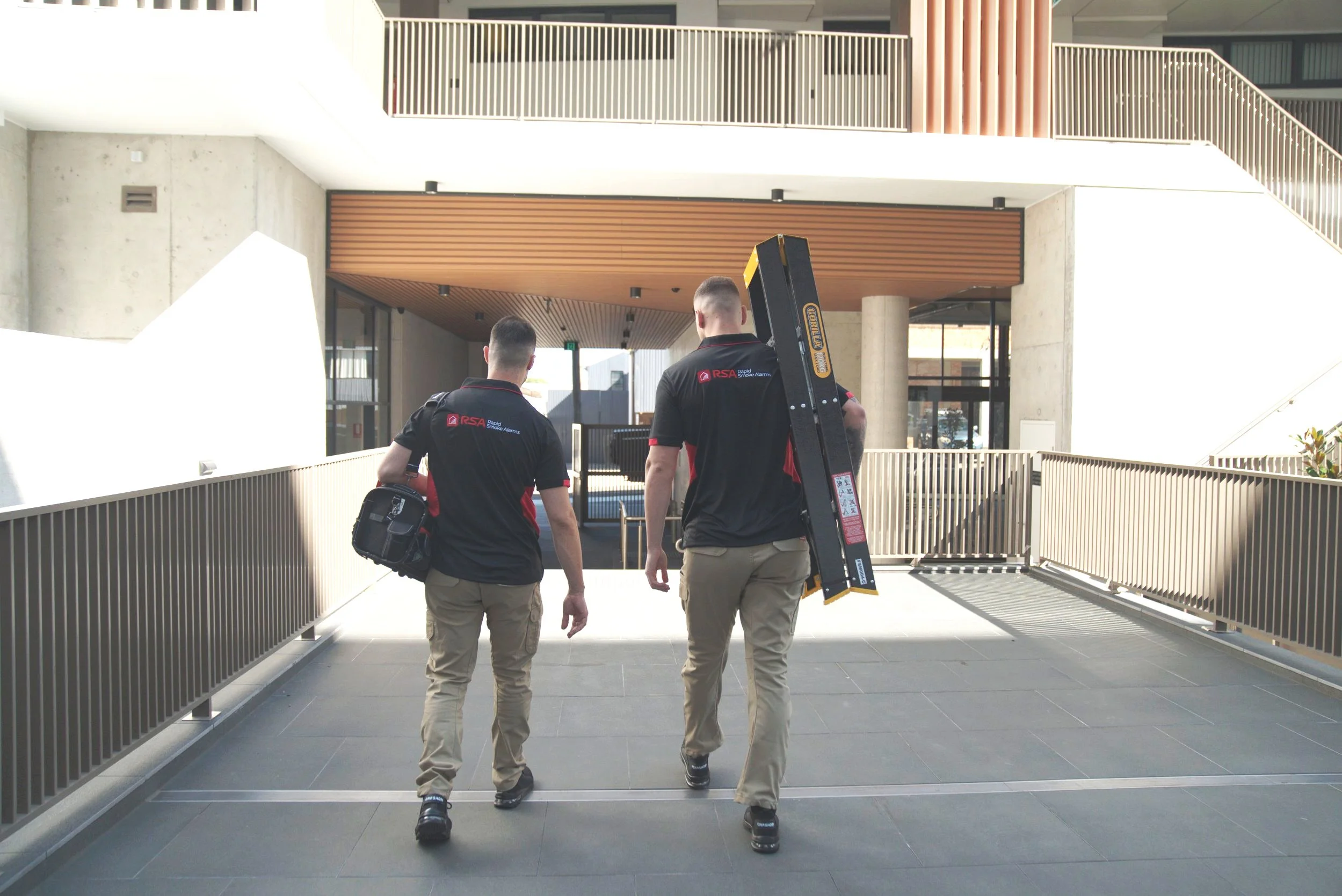
Servicing is carried out by specially trained Rapid Smoke Alarm Australia technicians.
-
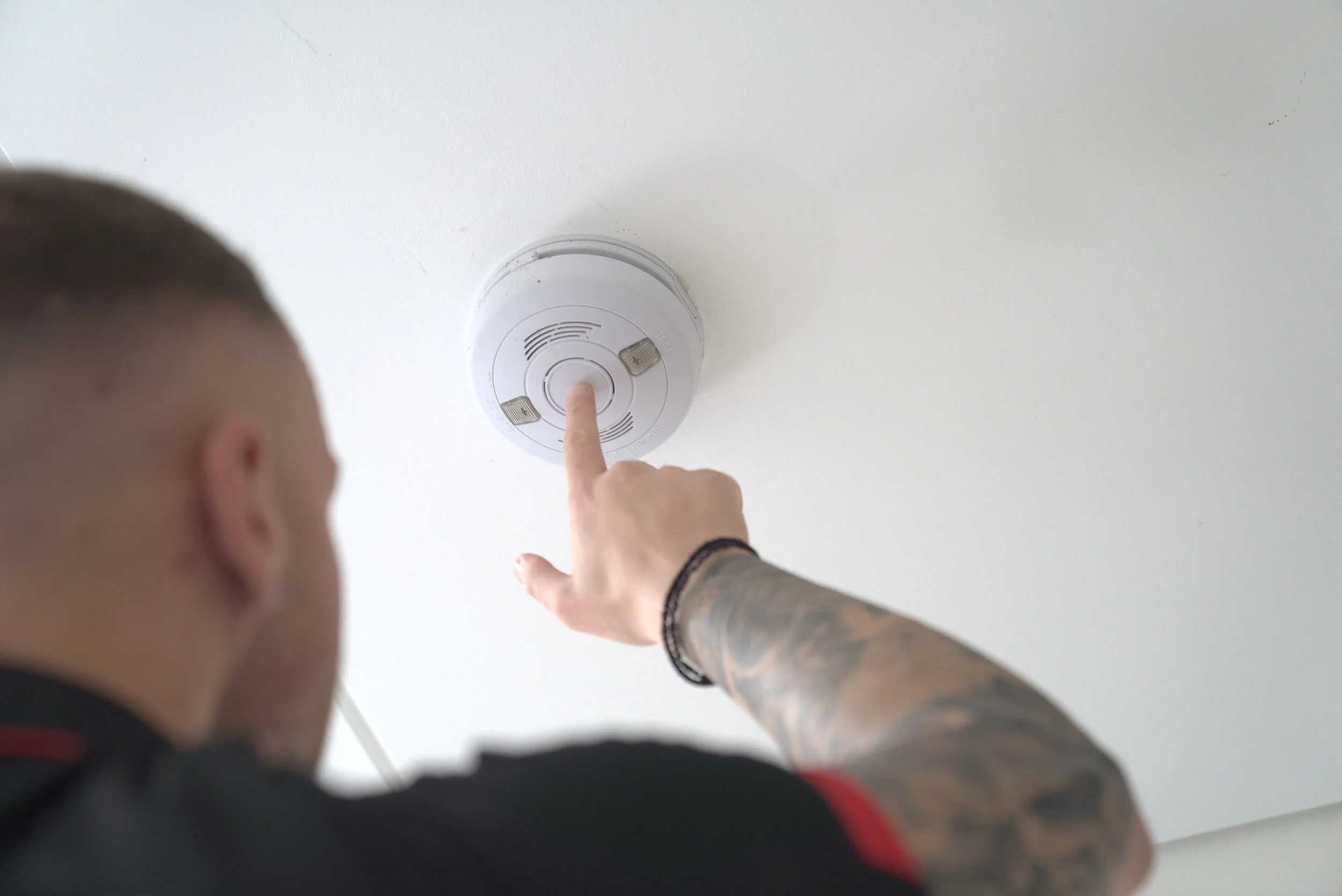
A maintenance check on each alarm, including smoke, button and decibel tests.
-
Free replacement of smoke alarm batteries.
-
Replacing faulty or expired smoke alarms, including free call outs (additional supply at cost).
-
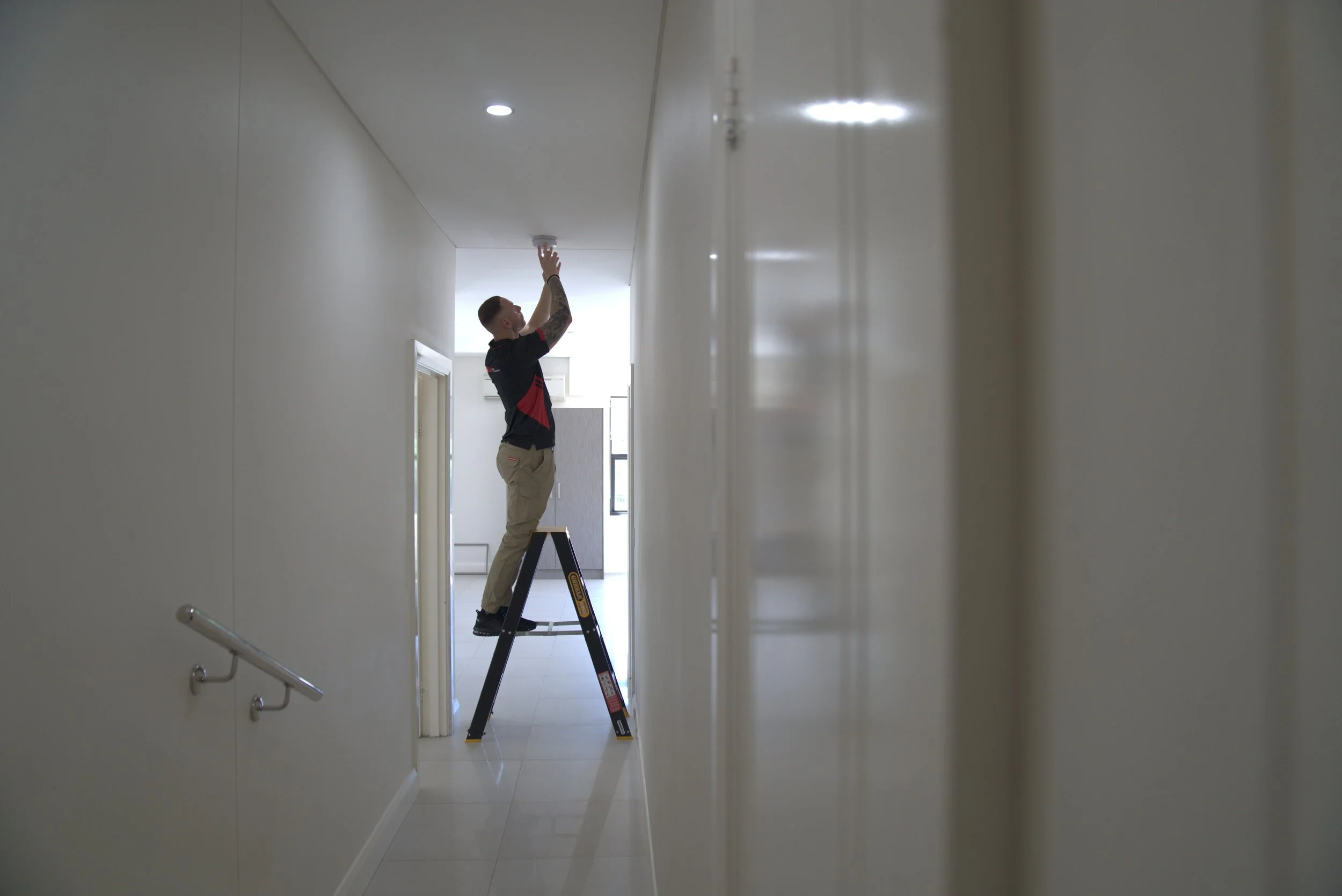
An assessment as to proper alarm positioning to ensure compliance.
Did you know?
In NSW Fire & Rescue respond to approximately 4,500 house fires each year. Half of these fires start in the kitchen, mostly due to unattended cooking. Electrical appliances and fault account for almost 40% of home fires and the remaining 10% are from other sources. (Reference NSW Fire & Rescue)
NSW Smoke Alarm Legislation
To be read in conjunction with the Environmental Planning and Assessment Act 1979 No 203, Building Legislation Amendment (Smoke Alarms) Act 2005 No 57, Residential Tenancies Act 2010 No 42 and Residential Tenancies Regulation 2019.The New StandardSmoke alarms must comply with the Australian Standard AS3786. The current standard is the AS3786:2014 standard.
Smoke alarms must be installed on or near the ceiling in the following areas:
On any storey that has a bedroom or another room defined as a sleeping area, an alarm must be installed in every corridor or hallway associated with a bedroom or sleeping area, and if there’s no hallway or corridor then between the part/s of the home containing the bedroom or sleeping area and the rest of the dwelling.
On all storeys that don’t contain a bedroom at the most likely exit point from that storey e.g. if the lower level of a two storey home has no bedrooms a smoke alarm should be located between the nearest exit door and the stairwell.
Smoke alarms must be checked every year to ensure they are working, and any smoke alarm that has expired or is found to be faulty must be replaced.
Where the smoke alarm runs on a replaceable battery or has a replaceable battery as a backup, the battery must be replaced annually.
All high set homes with an enclosed room under the house must have a smoke alarm installed in that room.
Property managers and principals have obligations to ensure smoke alarms are both installed and properly maintained under the Work Health and Safety Act 2011 (NSW).
The relevant fire authority will ask property managers to provide documented evidence following a fire in a rented property to confirm the smoke alarm requirements were met in conjunction with the Environmental Planning and Assessment Act 1979 No 203, Building Legislation Amendment (Smoke Alarms) Act 2005 No 57, Residential Tenancies Act 2010 No 42 and Residential Tenancies Regulation 2019.
Important disclaimer
The advice provided in these guidelines is of a general nature only and is a summary of the main legislation and regulations affecting electrical safety in the relevant states described. It is not to be treated as a comprehensive appraisal of all electrical safety legislation and regulations in force. This advice does not constitute legal advice and should not be relied upon as such. The advice is a summary of guidelines published by state and territory government websites. Accordingly, we have relied on the accuracy of the content published by the relevant websites in compiling this advice. You should seek legal or other professional advice before acting or relying on any of the content.
Further information
For more information on the Regulations: